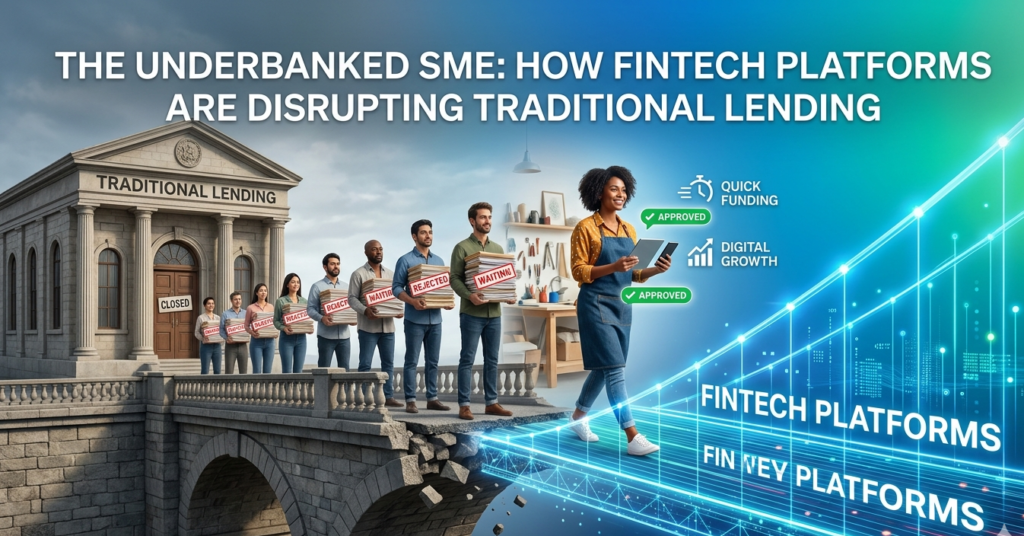
You’ve built a real business. You have customers, a track record, and a plan for growth. Yet the moment you approached your high street bank for a loan, you were met with a lengthy application, a mountain of paperwork, and — far too often — a flat rejection. If that sounds familiar, you are far from alone.
Millions of UK small businesses are classified as underbanked: they have genuine, fundable needs, but they fall through the cracks of traditional lending criteria. That gap is exactly where alternative business lending UK platforms have stepped in — and where the fintech sector is quietly rewriting the rules of commercial finance. At Pello Pay, we believe every viable SME deserves access to the right funding at the right time. In this guide, we break down the underbanked SME problem, the failings of traditional banking, and how modern fintech platforms are offering smarter, faster, and more flexible solutions.
Table of Contents
Who Is the Underbanked SME?
The term “underbanked” is typically associated with individuals who lack access to mainstream financial services — but it applies equally to a significant portion of the UK’s 5.5 million small and medium-sized enterprises.
An underbanked SME is not necessarily a struggling or risky business. It is often a perfectly viable company that simply does not fit neatly into the rigid scoring models used by traditional high street lenders. Common characteristics include:
- Sole traders and micro-businesses with fewer than 10 employees
- Businesses under 2–3 years old that lack the trading history banks require
- Seasonal businesses with inconsistent monthly revenue patterns
- Companies in non-traditional or emerging sectors that banks don’t fully understand
- SMEs with mixed or limited credit histories, despite strong current performance
- Fast-growing businesses whose financials look “unusual” on paper but are healthy in reality
According to the Federation of Small Businesses (FSB), a significant proportion of small business loan applications are declined annually, with many SME owners not even bothering to apply because they expect rejection. This “discouraged borrower” effect quietly starves growing businesses of the capital they need. (Source: Federation of Small Businesses)
The underbanked SME problem is not a niche issue. It represents a structural gap at the heart of the UK’s commercial lending ecosystem — and it costs the economy billions in unrealised growth every year.
Why Traditional Banks Keep Saying No to SMEs
Understanding the problem starts with understanding why high street banks struggle to serve SMEs effectively. The answer lies not in malice, but in structure.
The Rigidity of Traditional Credit Scoring
Banks use standardised credit scoring models that were largely built around large corporate borrowers and personal finance products. These models rely heavily on:
- Years of audited accounts (typically 3+ years minimum)
- High and consistent monthly turnover thresholds
- Strong personal and business credit scores
- Tangible collateral such as property or equipment
- Low existing debt-to-equity ratios
For many SMEs — particularly startups, sole traders, and businesses in growth phases — meeting all of these criteria simultaneously is almost impossible. The bank’s model is not designed to capture the full picture of a business’s potential.
The Cost of Serving Small Loans
There’s also a commercial reality at play. The administrative cost of underwriting a £30,000 SME loan is nearly as high as underwriting a £500,000 corporate facility. From a pure return-on-effort perspective, banks have historically deprioritised small business lending in favour of larger, more profitable deals.
Post-2008 Risk Aversion
The financial crisis of 2008 triggered a lasting shift in bank lending behaviour. Regulatory capital requirements tightened significantly, making banks far more conservative about who they lend to. While this was understandable from a systemic risk perspective, it disproportionately impacted small businesses that were already operating at the margins of traditional lending criteria. alternative business lending UK.
The British Business Bank has consistently highlighted the SME finance gap in its annual Small Business Finance Markets report, noting that demand for external finance among SMEs frequently outstrips supply from traditional lenders. (Source: British Business Bank)
The Rise of Alternative Business Lending in the UK
The past decade has seen alternative business lending in the UK grow from a niche corner of the market into a mainstream force. Driven by open banking regulation, advances in data analytics, and a post-pandemic acceleration in digital finance adoption, the alternative lending sector now encompasses a diverse ecosystem of:
- Peer-to-peer (P2P) lenders
- Marketplace lending platforms
- Specialist challenger banks
- Revenue-based finance providers
- Invoice finance and asset finance specialists
- Broker-matching platforms like Pello Pay
The shift has been significant. Where a business owner once had only two or three high street banks to choose from, they now have access to a panel of 50+ lenders — each with different risk appetites, sector expertise, and product offerings. The result is a far more competitive and tailored lending environment.
Critically, the rise of fintech business lending platforms has not just increased the number of lenders available. It has fundamentally changed how lending decisions are made — moving away from outdated paper-based processes towards real-time data assessment, open banking integrations, and intelligent matching algorithms.
5 Ways Fintech Platforms Are Disrupting Traditional Lending
1. Smarter Credit Assessment Through Open Banking
Traditional banks base lending decisions almost entirely on historical documents: two or three years of accounts, tax returns, and bank statements. Fintech lenders take a different approach.
Through open banking integrations (made possible by the UK’s FCA-regulated open banking framework), fintech platforms can analyse real-time cash flow data directly from a business’s bank account. This gives lenders a live, accurate picture of a company’s financial health — not just a historical snapshot. For businesses with short trading histories or uneven revenue patterns, this shift alone dramatically increases their chances of securing funding.
2. Faster Decisions Without Sacrificing Suitability
Speed matters enormously in business. A cash flow emergency, a supplier discount, or a growth opportunity will not wait weeks for a bank committee to deliberate. Fintech platforms leverage automated underwriting and lender-matching algorithms to deliver funding decisions in hours rather than weeks.
But speed alone is not the full story. The best platforms — including Pello Pay — combine technology with human expert oversight to ensure that the loan a business is matched with is not just the fastest option, but the right one. A business that needs long-term asset finance, for instance, should not be pushed towards a short-term loan simply because it processes faster.
3. A Wider Range of Products Tailored to SME Realities
The traditional bank’s product menu for SMEs is narrow: a standard term loan, an overdraft, and perhaps a credit card. Fintech-backed alternative business lending UK offers a far richer product landscape, including:
- Unsecured business loans for businesses without property to pledge as collateral
- Secured loans for those who can leverage assets for better rates
- Invoice finance to unlock cash tied up in unpaid client invoices
- Asset finance to acquire equipment without draining working capital
- Emergency loans for urgent, unexpected cash needs
- Short-term loans for bridging gaps or capitalising on time-sensitive opportunities
- Long-term loans for sustained growth and major investment
This breadth means that underbanked SMEs are no longer forced to accept a one-size-fits-all product. They can access funding that genuinely matches their business model, risk profile, and growth ambitions.
4. Transparent, Comparable Lending Terms
One of the most common complaints SME owners have about traditional finance is a lack of transparency. Terms are buried in jargon, fees are hidden in footnotes, and comparisons between lenders are almost impossible to make without professional advice.
Fintech platforms have disrupted this by presenting clear, comparable lending options side by side — including real interest rates, repayment schedules, and total cost of capital. This transparency empowers business owners to make genuinely informed decisions, rather than simply accepting whatever their bank offers.
5. Inclusive Criteria That Reflect Modern Business Reality
Perhaps the most transformative aspect of fintech disruption in traditional lending is the shift towards inclusive lending criteria. Fintech lenders and broker platforms assess businesses through a broader lens, incorporating:
- Transaction history and cash flow trends alongside formal accounts
- Sector context and growth potential, not just backward-looking financials
- Director track record and industry experience
- Multiple data sources, reducing reliance on any single credit file
The result is a lending ecosystem that reflects the diverse reality of UK SME life — not just the narrow band of businesses that happen to tick every traditional box.
Choosing the Right Alternative Business Loan for Your Needs
Not all alternative finance is created equal, and different business situations call for different solutions. Here’s a concise breakdown to help you identify the most appropriate product:
| Business Situation | Recommended Finance Type |
|---|---|
| Need capital quickly, no assets to secure | Unsecured Business Loan |
| Cash flow crisis or unexpected cost | Emergency Business Loan |
| Buying machinery, vehicles, or equipment | Asset Finance |
| Unpaid invoices draining your working capital | Invoice Finance |
| Sustained investment over 3–10 years | Long-Term Business Loan |
| Have assets and want the best rates | Secured Business Loan |
If you’re unsure which product fits your situation, the most important first step is getting expert advice before committing to any facility. Choosing the wrong type of finance — however fast the approval — can create unnecessary costs and complications down the line.
Key Questions to Ask Before Applying
- What will the funds be used for, and over what timeframe?
- Can the business comfortably service the repayments from current cash flow?
- Does the lender require personal guarantees or collateral?
- What are the total costs, including arrangement fees and early repayment charges?
- Is the lender FCA-regulated?
Explore all your business loan options and compare products across the full spectrum before making a decision.
What to Look for in a Fintech Business Lending Platform
Not every platform that calls itself “fintech” is delivering genuine value. As a business owner navigating SME finance alternatives, here are the hallmarks of a trustworthy, effective lending platform:
✅ Access to multiple lenders, not just one A single-lender platform is simply a lender in disguise. A genuine marketplace or broker platform will give you access to a panel of 20+ lenders so that competition works in your favour.
✅ FCA regulation and lender compliance All legitimate UK lending platforms and their partner lenders must be authorised and regulated by the Financial Conduct Authority (FCA). Always verify this before proceeding with any application.
✅ Human support alongside technology Algorithms are powerful, but they cannot replace the nuanced understanding of an experienced finance specialist. The best platforms offer a genuine “human + tech” approach — technology to match and filter, experts to advise and support.
✅ No hidden fees or hard credit checks at the comparison stage Browsing your options should never cost you anything — financially or in terms of your credit score. Soft searches at the comparison stage are best practice.
✅ Clear, jargon-free communication Business finance can be complex, but explaining it shouldn’t be. Platforms that translate financial terms into plain English demonstrate that they are genuinely on the side of the business owner.
✅ A breadth of product types Speed is irrelevant if the product isn’t right. A platform that only offers one or two product types is not truly serving your needs.
How Pello Pay Supports Underbanked SMEs
At Pello Pay, we were built specifically to address the underbanked SME problem. We operate as a sophisticated, independent business finance matching platform — connecting UK SMEs with a panel of 50+ trusted lenders across the full spectrum of commercial finance products.
Here’s what makes our approach different:
A “Human + Tech” Approach That Goes Beyond Speed
We combine our proprietary lender-matching engine with real human expertise. When you come to us, you’re not just getting a fast match — you’re getting access to finance specialists who understand your sector, your growth stage, and your specific funding needs.
Unlike platforms that lead with “90 seconds” as their entire value proposition, our priority is matching you with the right lender — not just any lender. Speed is a feature of how we work. Fit is the foundation.
Transparency at Every Stage
From the moment you start your application, you’ll see real-time lender options with clear rates, terms, and eligibility criteria. No jargon. No hidden fees. No obligation to proceed. We believe informed business owners make better financial decisions — and that benefits everyone.
An Urgent Need? We Can Help Immediately
If your business is facing a cash flow emergency, we can help you access emergency funding without the wait. Whether it’s an unexpected tax bill, a supplier payment falling due, or a sudden drop in revenue, our platform connects you with lenders who specialise in fast-turnaround facilities. Explore emergency loan options here.
Ready to Find Your Funding?
Whether you need £10,000 to cover a short-term gap or £1 million for a major expansion, Pello Pay gives you the tools, the data, and the expert support to find the right fit. Our 2-minute application form connects you with lenders that match your profile — no guesswork, no wasted time.
Speak to a Pello Pay finance specialist today and find out exactly what your business qualifies for.
Final Thoughts
The underbanked SME is not a niche problem. It is a defining challenge for the UK’s economic growth — and one that traditional banking has repeatedly failed to solve. The good news is that the alternative business lending UK ecosystem has never been stronger, more competitive, or more accessible.
Fintech platforms are not simply offering a digital version of the same old bank loan. They are building an entirely new infrastructure for SME finance: one that uses better data, smarter matching, a wider product range, and a genuine commitment to transparency.
If your business has been turned down by a high street bank — or if you’ve never applied because you assumed you wouldn’t qualify — now is the time to explore what the alternative lending market can do for you. The funding your business deserves is out there. The right platform will help you find it.
About Pello Pay: Pello Pay is a UK-based business finance matching platform connecting SMEs with 50+ lenders across secured loans, unsecured loans, asset finance, invoice finance, emergency loans, short-term loans, and long-term loans. We are free to use, with no impact to your credit score at the comparison stage.